Core Section vs Outer Section: Topical Map Architecture Explained
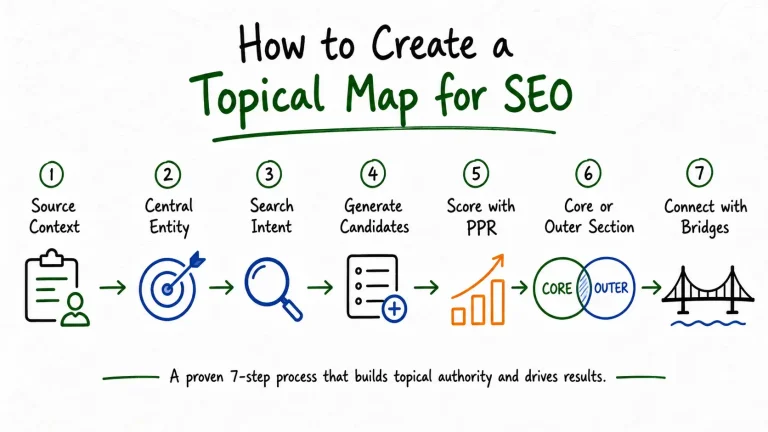
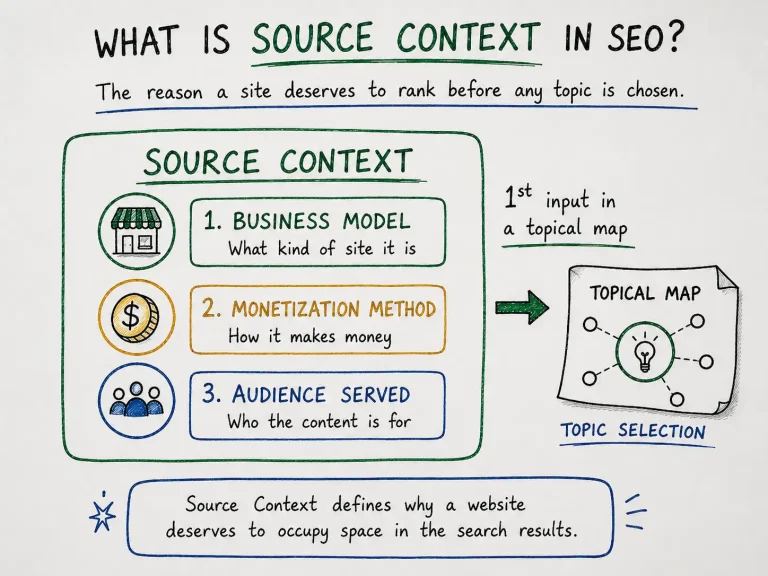
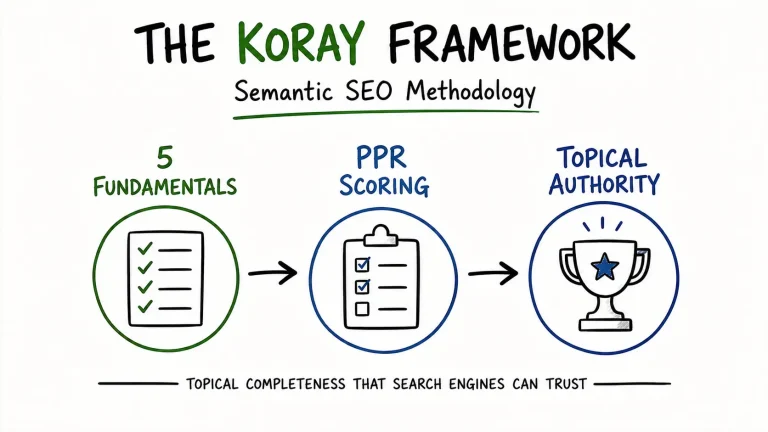
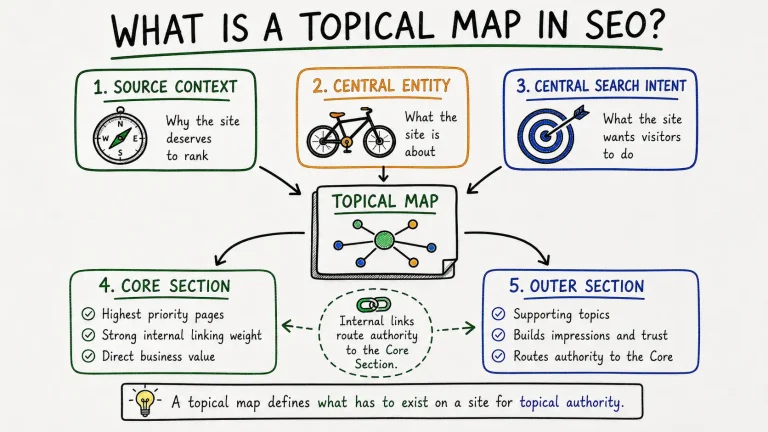
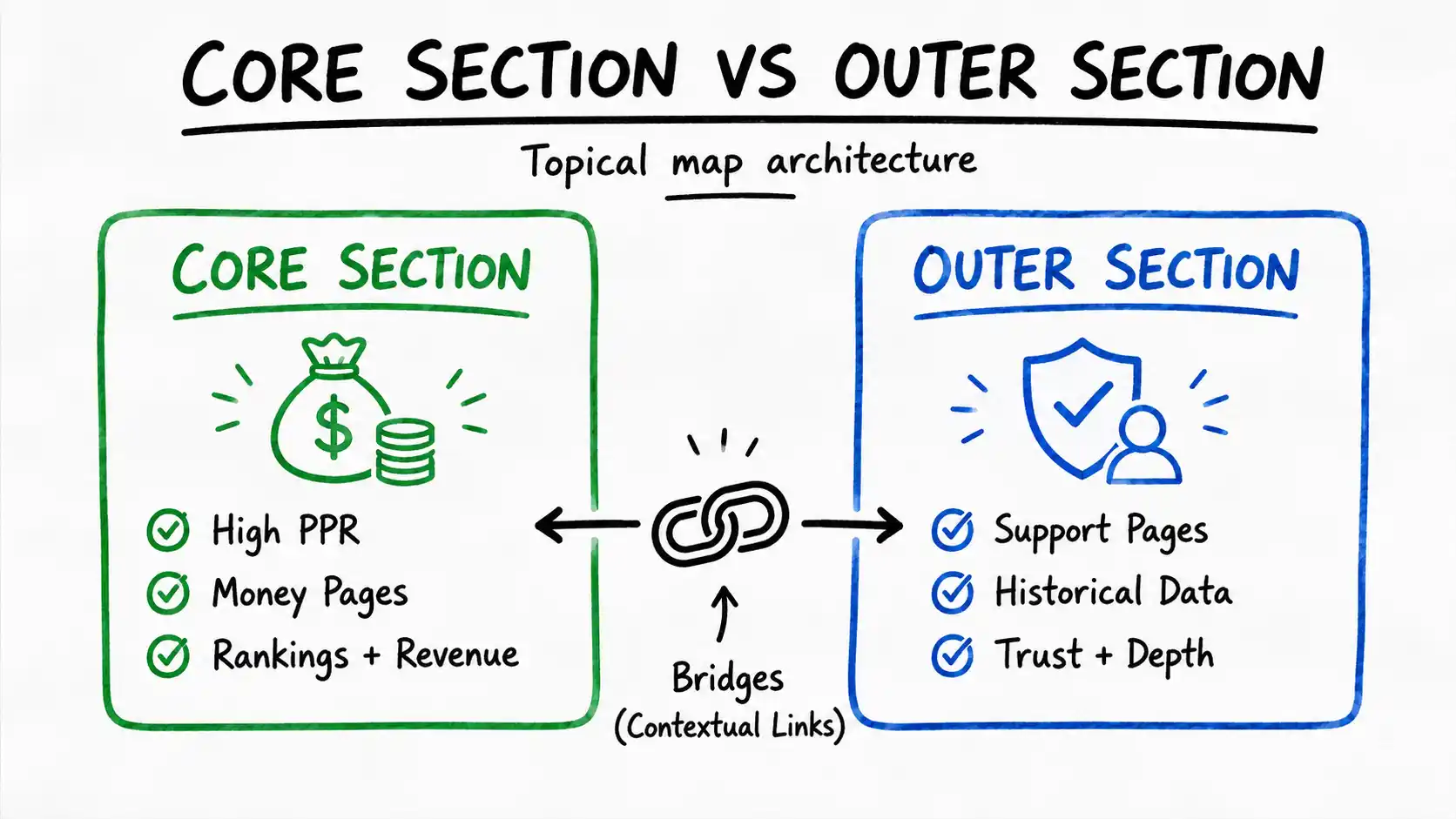
The Core Section holds the topics scored highest for Prominence and Relevance to a site’s Source Context, carrying the majority of its monetization pages and internal linking weight, while the Outer Section holds supporting topics that build historical data and route authority back to the Core Section. These are the 4th and 5th of the 5 fundamentals in the Koray Framework, and every topic scored through PPR scoring gets placed into one of them.
What the Core Section Does
The Core Section is where a site’s highest-scoring topics live, the ones that clear the PPR threshold with the strongest Prominence and Relevance to the Source Context. These pages carry the majority of a site’s internal linking weight, because they’re the pages every other page on the site should ultimately point toward.
For most businesses, this is where monetization concentrates: product pages, service pages, comparison pages, anything a visitor engages with close to a buying decision. Ranking signals flow into this section from the rest of the site, which is why getting Core Section placement right matters more than any other single decision in a topical map.
What the Outer Section Does
The Outer Section holds topics that clear the PPR threshold with moderate Prominence and Relevance, topics that support the site’s subject without directly driving revenue. Their job is to accumulate historical data, search impressions, clicks, and engagement, over time, and to widen the site’s footprint across the full breadth of its Source Context.
Outer Section pages rarely convert directly. That’s expected. Their contribution is indirect: every one of them proves to search engines that the site covers its subject completely, and every internal link from an Outer page to a Core page routes some of that accumulated trust back to where monetization actually happens.
Why Teams Systematically Neglect the Outer Section
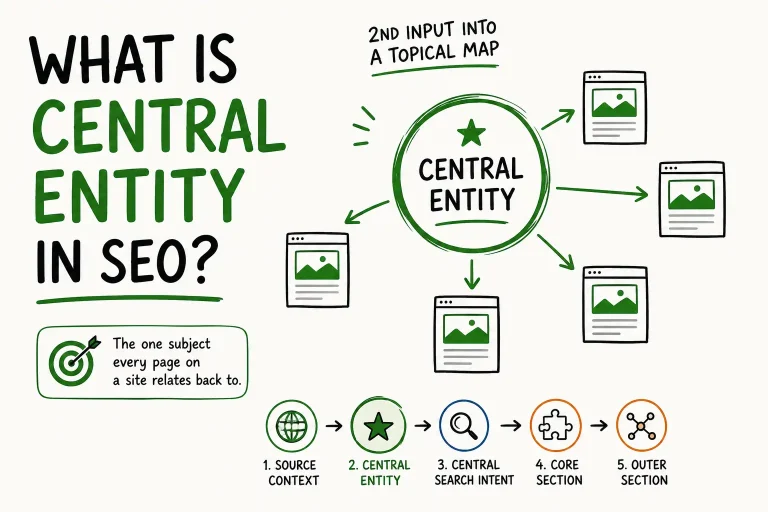
The Core Section rarely gets skipped, it’s obviously connected to revenue, so it gets built first and built carefully. The Outer Section is where most topical maps quietly fall apart, not because anyone decides to skip it, but because it gets built the wrong way: ad hoc, page by page, based on whatever topics a writer or strategist happens to remember, instead of systematically, against a defined taxonomy of every attribute connected to the Central Entity.
This produces an Outer Section with real gaps, entire attribute categories missing, while other attributes get covered 3 or 4 times because they were simply top of mind. The fix isn’t more content, it’s a systematic pass: take every attribute identified for the Central Entity during Source Context and Central Entity definition, and confirm each one has Outer Section coverage before considering the section complete. A thin, gap-filled Outer Section leaves the Core Section without the historical data and trust signals it needs, the Core Section ends up resting on a foundation that was never fully built.
How Core and Outer Sections Connect: Bridges
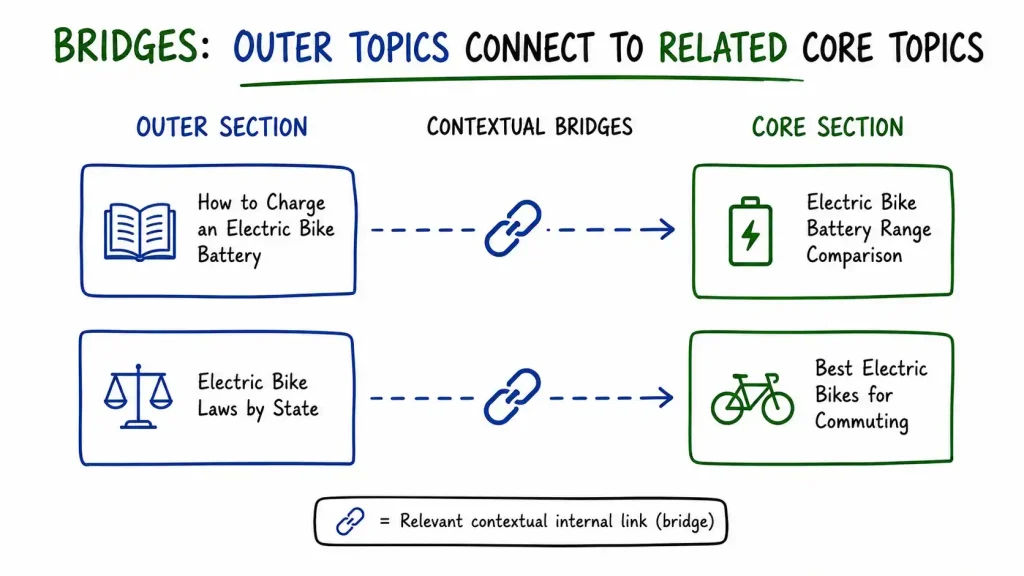
A topical map isn’t 2 separate lists of pages. Core and Outer Sections connect through bridges, internal links built along contextual vectors that route authority from supporting pages back to the pages that matter most for monetization. A bridge isn’t just any internal link, it’s a link placed specifically because the linking page’s topic genuinely relates to the linked page’s topic, not because a sitemap needed one more connection.
This is why internal linking direction matters as much as internal linking existence. An Outer Section page about battery maintenance should link to the Core Section page about battery range comparisons, because the topics are genuinely connected, not to an unrelated Core page just because it’s the highest-priority page on the site. Bridges are what turn a pile of correctly-scored pages into one deliberate structure, without them, Core and Outer Sections exist next to each other without actually reinforcing one another.
Core Section vs Outer Section Example
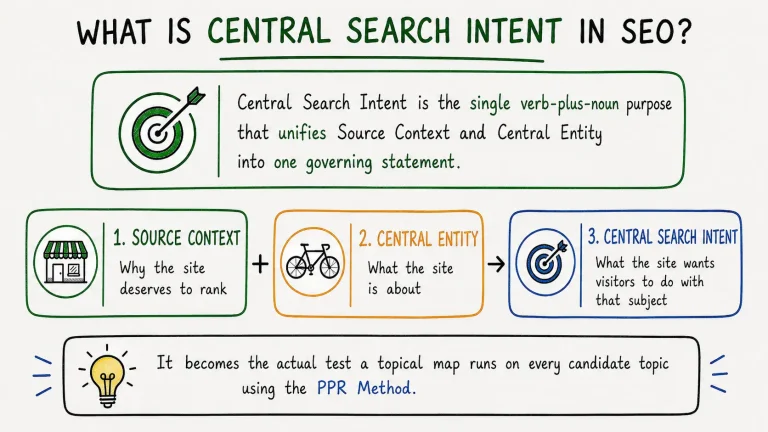
For the electric bike retailer used throughout this series, Source Context is direct product sales, Central Entity is electric bikes, and the PPR-scored topics split cleanly once the scoring is complete.
Core Section: Best Electric Bikes for Commuting (PPR 9.2), Electric Bike Battery Range Comparison (PPR 8.2). Both score high on Prominence and Relevance, both sit close to a purchase decision, both carry heavy internal linking weight from the rest of the site.
Outer Section: How to Charge an Electric Bike Battery (PPR 6.0), Electric Bike Laws by State (PPR 5.0). Both support the Central Entity without driving direct revenue, both build historical data over time, and both link back to relevant Core Section pages, the charging guide links to the battery range comparison, the legal guide links to the commuting bikes page, through proper bridges rather than generic sitewide links.
This is the same worked example used in what a topical map is, extended here to show exactly how each topic’s PPR score determines its section, and how the sections connect once placement is finalized.
How Many Pages Should Be in Each Section?
There’s no fixed ratio between Core and Outer Section page counts, the correct number in each comes from how many topics clear the PPR threshold for that section, not from a target split decided in advance. What does hold steady is the overall map size by site scale: 30 to 60 topics for a small site, 100 to 250 for a mid-size site, 300 or more for an enterprise site, a range independently corroborated by industry sources beyond our own methodology.
Within that total, the Outer Section is typically larger than the Core Section, often by a significant margin, because it’s responsible for covering the full breadth of attributes connected to the Central Entity, not just the small set closest to a buying decision. A site with a disproportionately small Outer Section relative to its Core Section is usually a sign of the ad hoc-building problem described earlier, not evidence that the site simply doesn’t need much supporting content.
Build a Topical Map With Core and Outer Sections Placed Correctly
Every topical map built at TopicalMap.Services scores each topic through PPR before deciding where it belongs, then connects Core and Outer Sections through proper bridges, not generic sitewide links. See the full topical map service for pricing and deliverables.
Get Your Topical MapFrequently Asked Questions
Can a topic move from the Outer Section to the Core Section later?
Yes. If a topic’s Relevance or Prominence increases, a supporting product line becomes central to the business, for example, it can be rescored and moved into the Core Section, with its internal linking updated to reflect the new placement.
Does the Outer Section need to be published before the Core Section?
No, but neither should be published in isolation. Core Section pages benefit from having some Outer Section pages already live to link from, while Outer Section pages need Core Section pages to exist so their bridges have somewhere to route authority. Most maps interleave the two based on the publishing sequence set during map creation.
What happens if a site only builds a Core Section?
The site can still rank for its core topics, but without an Outer Section building historical data and trust signals, that ranking tends to plateau. This is the ‘resting on sand’ problem, monetization pages without the supporting content that earns search engines’ confidence in the site’s full topical coverage.
Is the Outer Section the same as a blog?
Not exactly. A blog is a content format. The Outer Section is a strategic classification, some Outer Section content lives on a blog, but Outer Section pages can also be resource pages, guides, or tools, as long as they’re scored through PPR and connected to the Core Section through bridges.
How do I know if a topic belongs in Core or Outer?
Run it through PPR scoring. High Prominence and Relevance places it in the Core Section regardless of search volume. Moderate scores with a supporting role relative to the Central Entity place it in the Outer Section.