The Koray Framework Explained: Semantic SEO Methodology
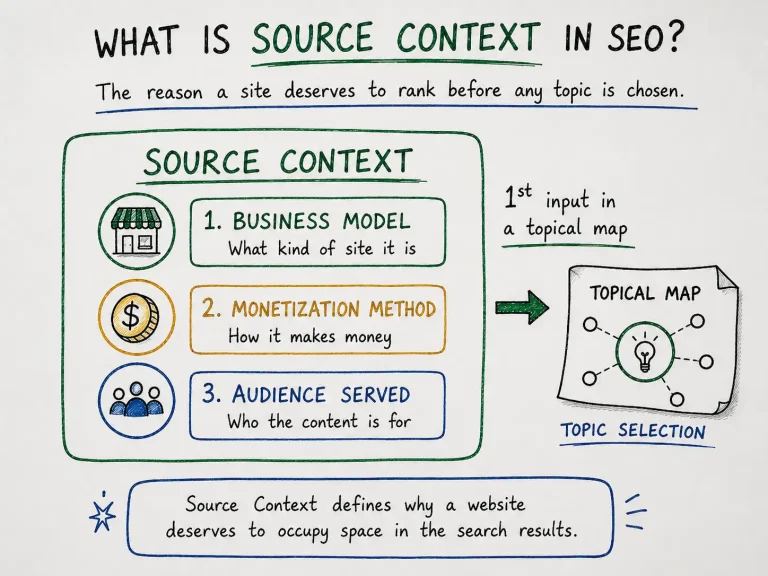
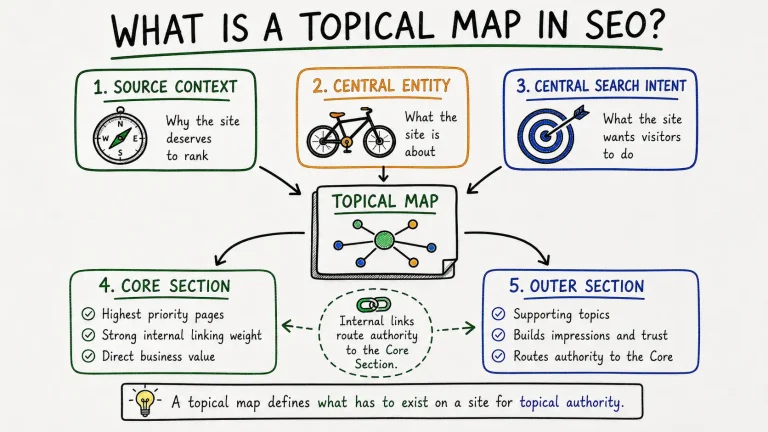
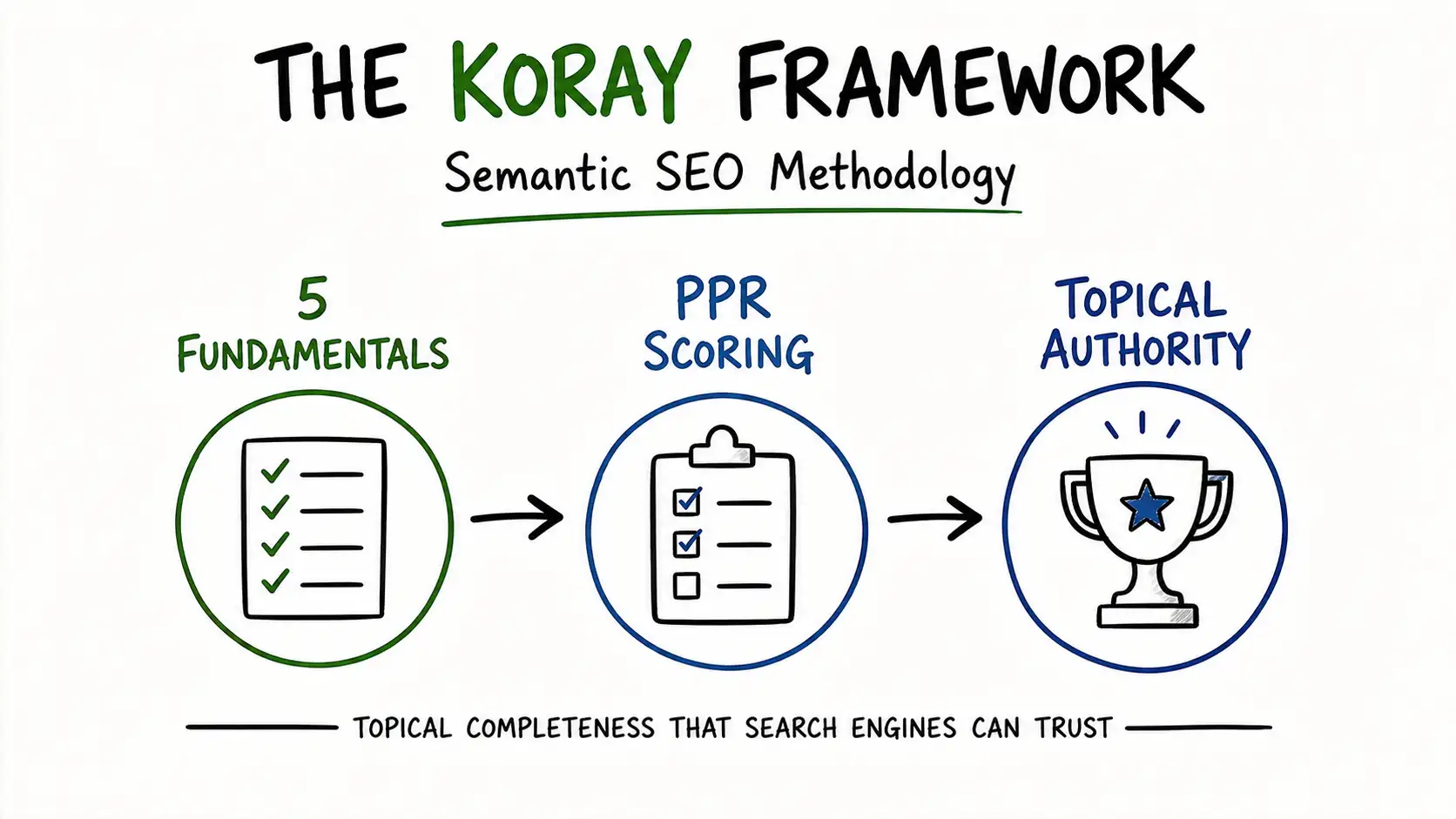
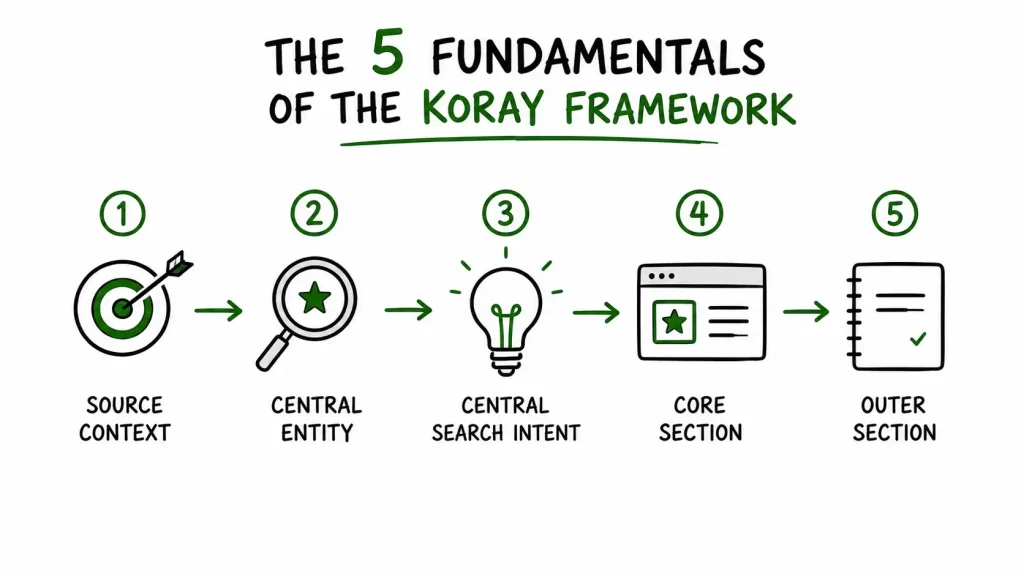
The Koray Framework is a semantic SEO methodology developed by Koray Tuğberk GÜBÜR that structures websites around entity relationships, topical completeness, and search engine retrieval mechanics rather than keyword volume, built on 5 fundamentals: Source Context, Central Entity, Central Search Intent, Core Section, and Outer Section. Every topical map, content brief, and semantic article produced at TopicalMap.Services applies this same methodology.
The framework’s community nickname, “Koraynese,” wasn’t coined by Koray himself. It emerged from his community members, clients, and collaborators to describe the consistency and specificity of his terminology, a recognition that his approach uses a distinct vocabulary precise enough to need its own name.
Koray Tuğberk GÜBÜR founded Holistic SEO & Digital and has consulted for companies across a wide range of industries since 2015, including Fortune 500 clients. He formally introduced the concept of Topical Authority on May 18, 2022, defining it as a semantic SEO methodology for ranking by processing connected topics and their associated search queries with accurate, expert information, rather than targeting isolated keywords.
The Koray Framework is a semantic SEO methodology developed by Koray Tuğberk GÜBÜR that structures websites around entity relationships, topical completeness, and search engine retrieval mechanics rather than keyword volume, built on 5 fundamentals: Source Context, Central Entity, Central Search Intent, Core Section, and Outer Section. Every topical map, content brief, and semantic article produced at TopicalMap.Services applies this same methodology.
The framework’s community nickname, “Koraynese,” wasn’t coined by Koray himself. It emerged from his community members, clients, and collaborators to describe the consistency and specificity of his terminology, a recognition that his approach uses a distinct vocabulary precise enough to need its own name.
Koray Tuğberk GÜBÜR founded Holistic SEO & Digital and has consulted for companies across a wide range of industries since 2015, including Fortune 500 clients. He formally introduced the concept of Topical Authority on May 18, 2022, defining it as a semantic SEO methodology for ranking by processing connected topics and their associated search queries with accurate, expert information, rather than targeting isolated keywords.
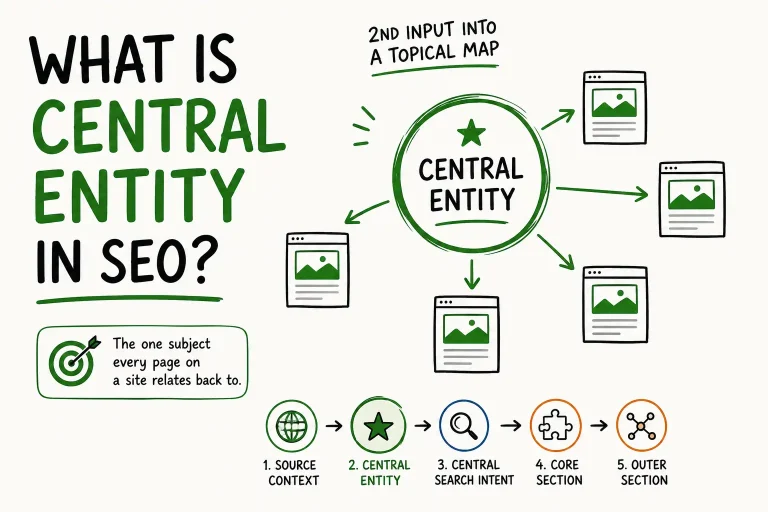
Central Entity defines the single subject every page on the site relates back to, deliberately chosen before a single page gets published. It’s the second input, defined immediately after Source Context.
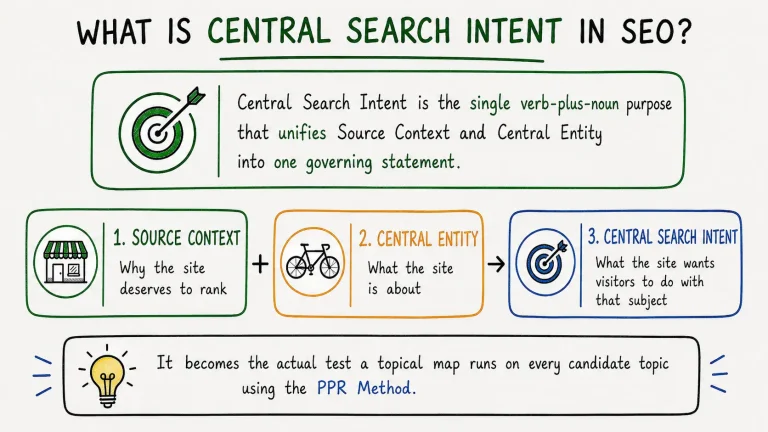
Central Search Intent unifies Source Context and Central Entity into one governing purpose, the actual test every candidate topic gets measured against once it’s defined.
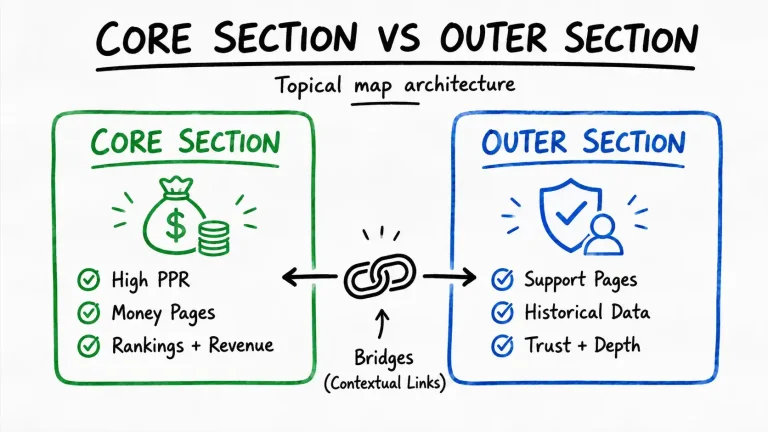
Core Section holds the topics scored highest for Prominence and Relevance to the Source Context, carrying the majority of a site’s monetization pages and internal linking weight.
Outer Section holds supporting topics that build historical data, in the form of search impressions and clicks, and route authority back to the Core Section through internal links.
The PPR Method — How Topics Get Scored
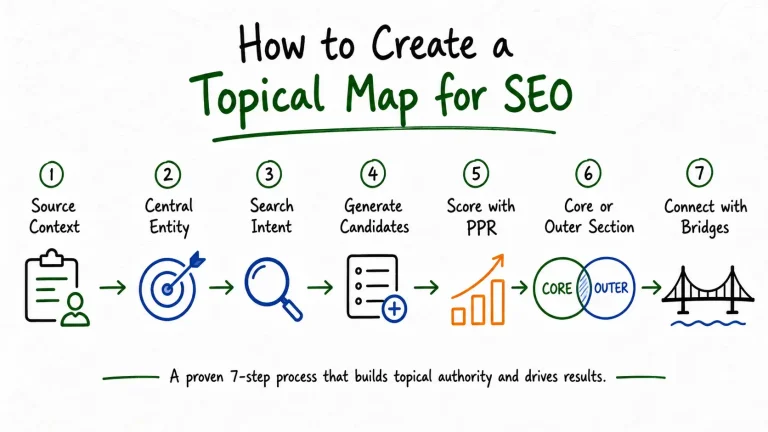
Every candidate topic in a Koray Framework topical map gets scored using the PPR method before it earns a place on the map, Prominence, Popularity, and Relevance, combined in a weighted formula that favors topical fit over search volume alone.
PPR Score = (Prominence × 0.40) + (Relevance × 0.40) + (Popularity × 0.20)
Prominence and Relevance carry equal, heavier weight because they determine whether a topic belongs on the site at all. Popularity, the only factor sourced from a keyword tool rather than strategic judgment, gets less weight on purpose. A topic with strong Prominence and Relevance can qualify for the Core Section even at modest search volume. A topic with strong search volume but no connection to Source Context gets rejected regardless of its Popularity score.
How Topical Authority Is Measured
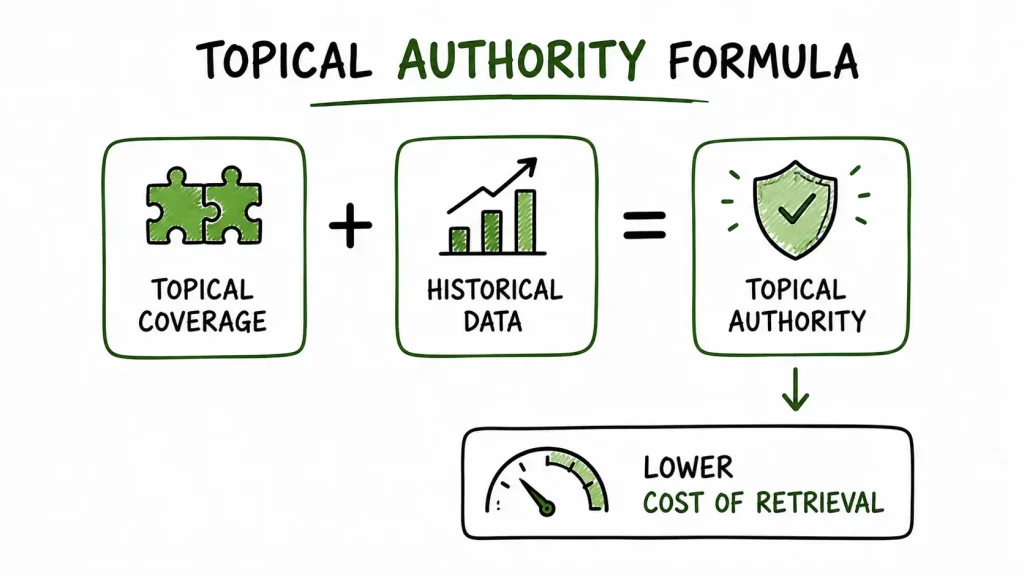
Koray Tuğberk GÜBÜR defines Topical Authority as the ranking state a site reaches when its topical coverage combines with sufficient historical data, providing a semantically organized content network that costs search engines less effort to retrieve, interpret, and trust than scattered, unconnected content.
Two components make up that formula. Topical Coverage is what the topical map produces directly, every topic scored and placed in the Core Section or Outer Section adds to it. Historical Data accumulates after publishing, consistent rankings, click-through patterns, and engagement signals collected over time. A topical map cannot manufacture Historical Data. It can only ensure Topical Coverage is complete enough for that data to compound instead of scattering across unrelated pages.
The mechanism behind why this works is Cost of Retrieval, how much computational and interpretive effort a search engine spends to understand what a page means and how it relates to the rest of a site. A page built from a topical map arrives with its relationships already defined, which Section it belongs to, which pages it links to, which Central Entity it supports. Lower Cost of Retrieval means faster, more confident indexing and ranking, and it’s the same principle that shows up directly in how Google’s own systems are documented to work, covered in the next section.
How the Koray Framework Connects to Google’s Real Systems
The Koray Framework’s emphasis on structure, reduced Cost of Retrieval, and machine-readable content isn’t a theoretical preference. It aligns directly with how Google’s own internal systems have been documented to actually work, confirmed through 2 independent sources: Google’s patent filings and the 2024 Content Warehouse API leak.
Google’s patents. Patents including US 10,068,022, “Identifying Topical Entities,” and US 9,009,192, “Identifying Central Entities,” describe how search systems determine the dominant entity for a resource by comparing search result overlap across candidate entities and applying a centrality score. This is the same principle behind why the framework requires one deliberately chosen Central Entity per site, not several competing ones.
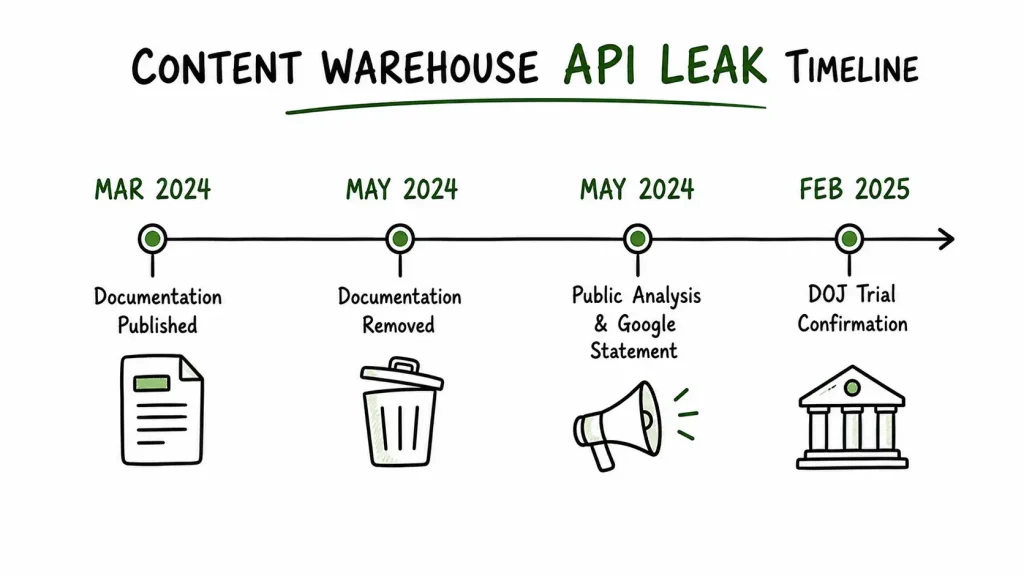
The Content Warehouse API leak. In spring 2024, internal documentation for Google Search’s Content Warehouse API was accidentally published to a public code repository, exposed for roughly 6 weeks before removal on May 7, 2024. Rand Fishkin and Mike King published an analysis of the documentation on May 27 and 28, 2024, and Google issued a carefully worded statement 2 days later that neither confirmed nor denied its authenticity. The documents’ legitimacy was further corroborated in February 2025, through testimony in the U.S. Department of Justice’s antitrust trial against Google. The leak covered 2,596 modules and over 14,000 documented attributes.
Two components from that documentation are directly relevant to how the Koray Framework describes topical structure:
CompositeDoc is the master record Google’s systems maintain for a single URL, aggregating all known information about that document.
PerDocData sits inside it as the primary container for document-level signals, on-page factors, quality scores, spam signals, freshness metrics, and engagement data, all of it structured, stored, and made accessible to Google’s ranking systems.
The existence of this structure confirms something the framework has treated as foundational for years: Google’s ranking systems evaluate documents as structured data, not as undifferentiated text. A page whose entity relationships, topical placement, and quality signals are already clear and consistent is easier for a system built this way to process than a page with no defined structure.
One additional documented signal worth noting is Q*, described in the leaked documentation as a largely static, long-term authority score, evidence that Google’s systems track sustained quality over time, not just per-page snapshots, which lines up directly with why the Koray Framework treats Historical Data as half of the Topical Authority formula.
Koray’s AI Agents and Framework Tooling
The Koray Framework extends beyond methodology into practical tooling. Koray Tuğberk GÜBÜR has built 48 custom AI agents across 9 categories, covering linguistic analysis, semantic extraction, entity mapping, topicality assessment, and several other specialized functions, all designed to accelerate the manual research the framework requires without replacing the strategic judgment behind it.
This tooling philosophy shapes how we work. Ehsan Khan built the Topical Map Attributes Evaluator, a custom GPT tool that applies PPR scoring logic to attribute evaluation for semantic SEO practitioners, following the same principle: AI tools handle repetitive analysis, human judgment handles the strategic decisions that determine whether a topic actually belongs on a site.
Read more about the tools and credentials behind our process on the About page.
How We Apply the Koray Framework at TopicalMap.Services
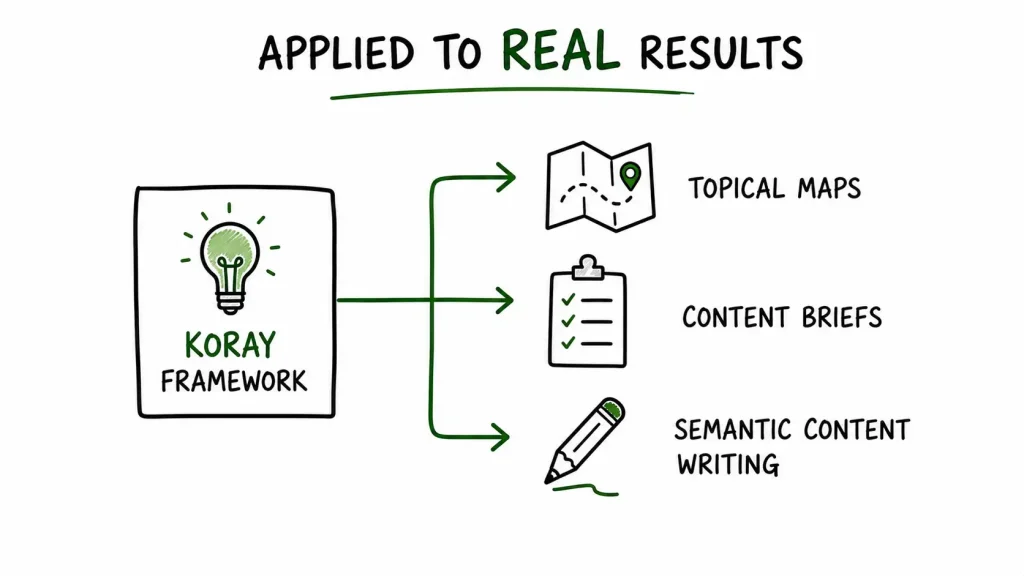
Every deliverable produced at TopicalMap.Services starts with the same 5 fundamentals covered on this page, applied in the same sequence, scored with the same PPR method.
Topical Map Service
Source Context, Central Entity, and Central Search Intent get defined first, before a single topic gets scored. Every candidate topic is then filtered through PPR scoring and placed in the Core Section or Outer Section.
Semantic Content Writing
Each semantic content writing article gets built around one macro topic, using the same entity relationships and contextual hierarchy principles covered in this framework, reducing Cost of Retrieval at the article level the same way a topical map reduces it at the site level.
Content Briefs
For teams with an existing topical map, briefs translate framework principles into execution-ready structure, heading hierarchy, entity scope, and internal linking guidance, so writers can apply the methodology without needing to master it first.
Get a Topical Map Built on the Koray Framework
Every principle covered on this page, Source Context, Central Entity, PPR scoring, and Cost of Retrieval, gets applied directly to your site when you order a topical map from TopicalMap.Services. See the full service for pricing, deliverables, and turnaround times.
Get Your Topical MapFrequently Asked Questions
Who created the Koray Framework?
Koray Tuğberk GÜBÜR, founder of Holistic SEO & Digital, developed the framework through consulting work dating back to 2015. He formally introduced the concept of Topical Authority on May 18, 2022, and has since consulted for a wide range of companies, including Fortune 500 clients.
What does “Koraynese” mean?
Koraynese is a nickname for the framework’s terminology, coined by Koray’s own community members and clients, not by Koray himself, to describe the consistency and specificity of his vocabulary. Terms like Source Context, Central Entity, and Cost of Retrieval are part of this terminology.
Is the Koray Framework based on official Google documentation?
Partly. It draws on Google’s public patent filings and aligns closely with structures revealed in the 2024 Content Warehouse API leak, including CompositeDoc and PerDocData, though Google has never officially confirmed which internal systems directly power its live ranking algorithm. The framework’s emphasis on structure and reduced Cost of Retrieval is consistent with, though not officially endorsed by, this documentation.
What is the difference between the Koray Framework and standard SEO?
Standard SEO commonly targets individual keywords and backlink volume. The Koray Framework targets topical completeness and entity relationships, using Source Context, Central Entity, and PPR scoring to decide what content should exist before any single page gets optimized for a keyword.
Do I need to understand the full framework to work with TopicalMap.Services?
No. Our team applies the framework directly to your project, you don’t need prior knowledge of Source Context, PPR scoring, or any other framework component. This page exists for transparency, so you understand the methodology behind what you’re receiving.
Is the Koray Framework only for large enterprise sites?
No. The framework scales down, a small site might qualify 30 to 60 topics through PPR scoring, while an enterprise site might qualify 300 or more. The methodology stays the same regardless of site size.