What Is Source Context in SEO?
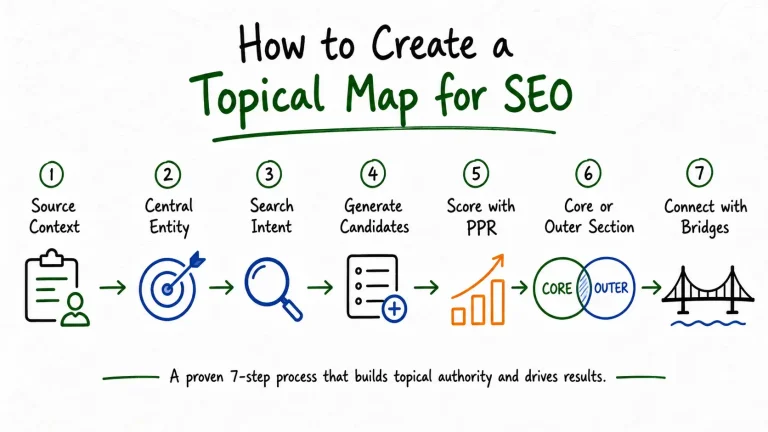
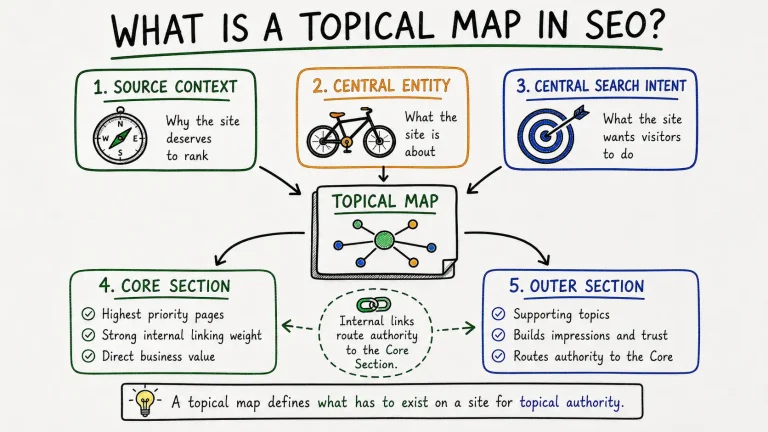
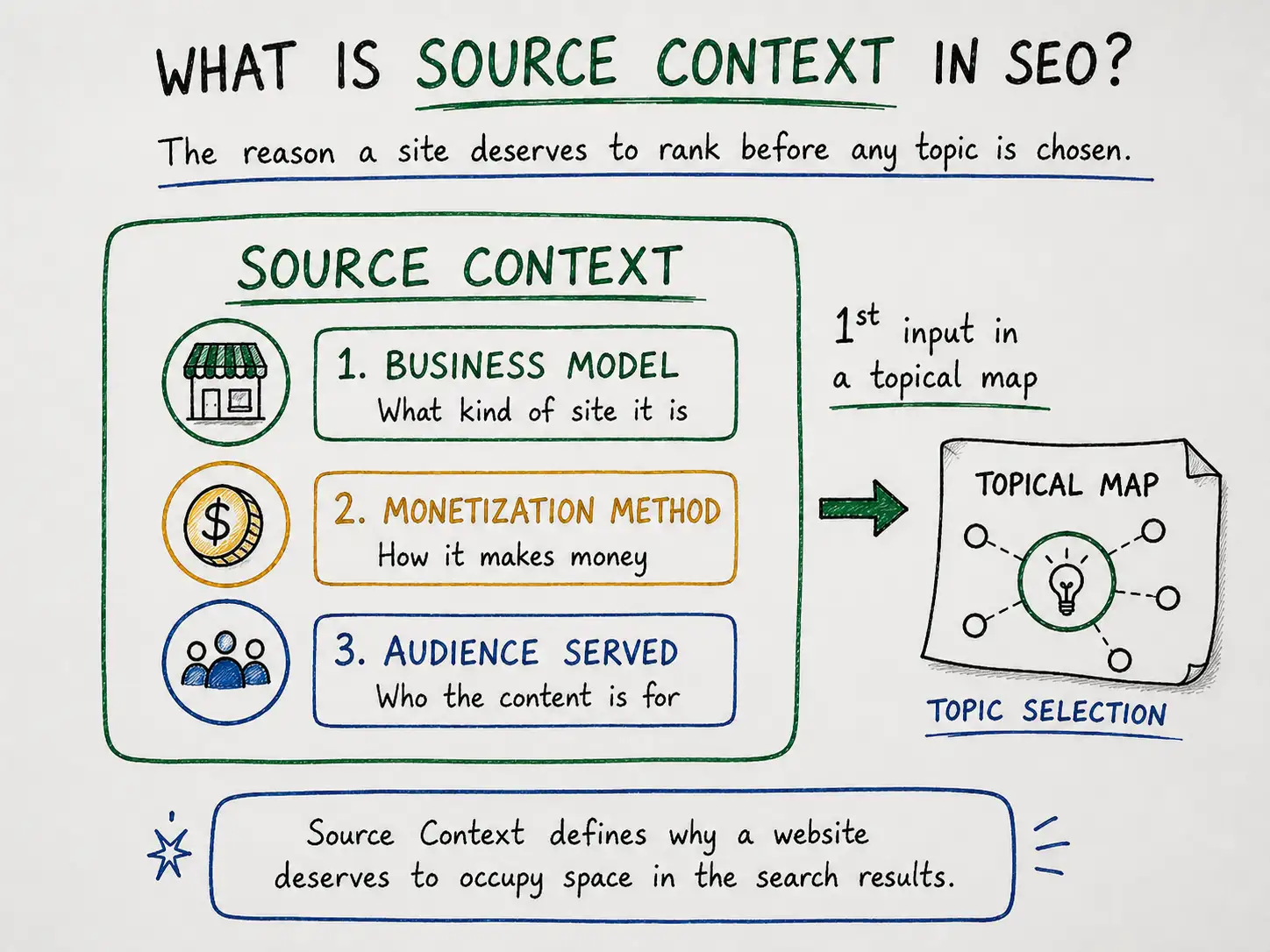
Source Context is the reason a website deserves to occupy space in the search results, defined by its business model, its monetization method, and the audience it serves. It is the first of the 5 components required to build a topical map, and every other decision in the map depends on it being defined correctly first.
Why Source Context Comes Before Any Topic Selection
Source Context gets defined before a single topic is chosen, because it is the standard every candidate topic gets tested against. Without it, there is no way to tell whether a high-volume topic actually belongs on a site or simply looks attractive in a keyword tool.
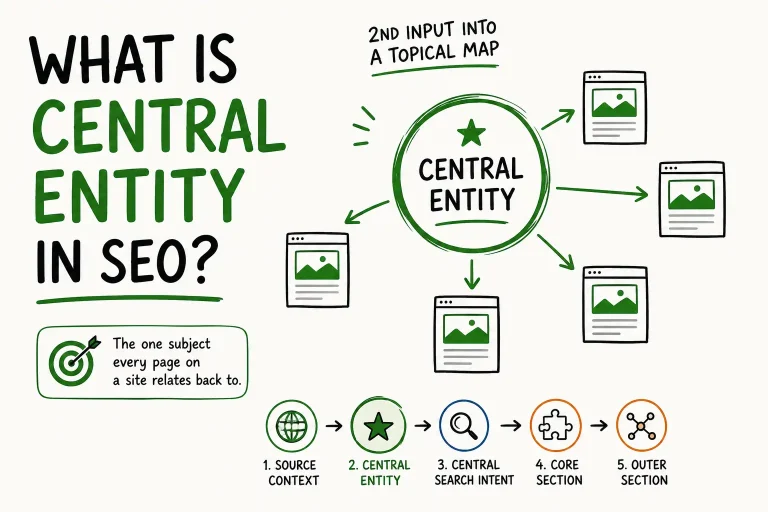
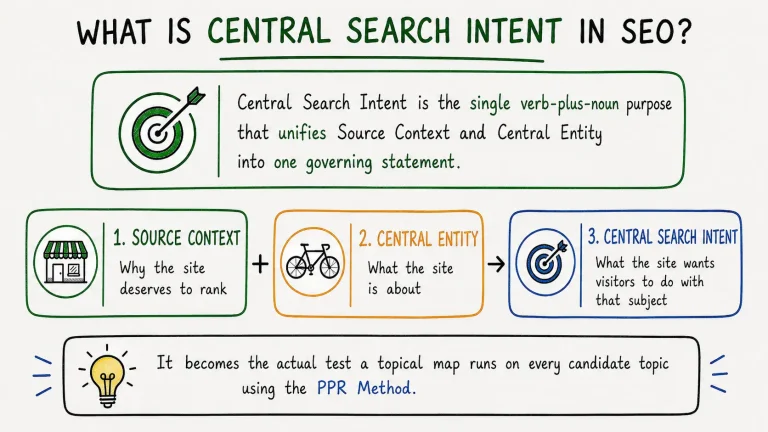
This is the first of the 5 inputs in a topical map, ahead of Central Entity and Central Search Intent. A site can identify its Central Entity accurately and still produce a diluted map if Source Context was never defined, because Central Entity describes what the site is about, while Source Context describes why the site is allowed to talk about it.
What Source Context Actually Defines
Source Context defines 3 things for a site, and all 3 need answers before a topical map can begin.
Business model. What the site is, structurally, an e-commerce store, a SaaS platform, a local service business, a publisher, an affiliate site. This determines what kind of content can plausibly build authority for it.
Monetization method. How the site turns visitors into revenue, direct product sales, subscription fees, lead generation, advertising, affiliate commissions. Two sites with the same Central Entity can have completely different topical maps if their monetization methods differ.
Audience served. Who the site’s content is actually for, which determines the depth, tone, and commercial intent of every topic on the map.
Source Context Example
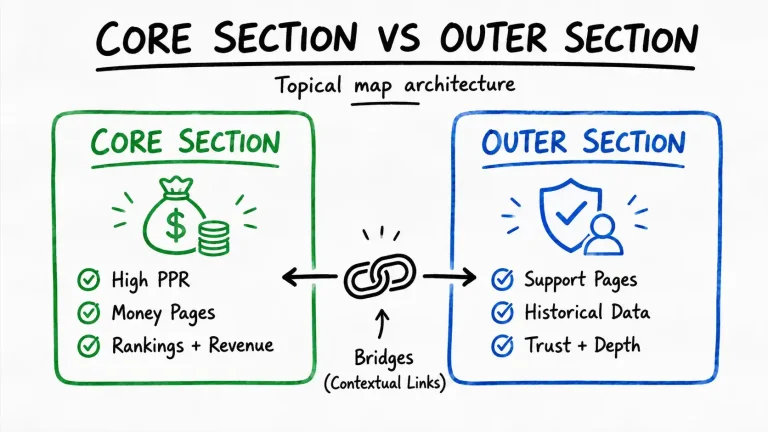
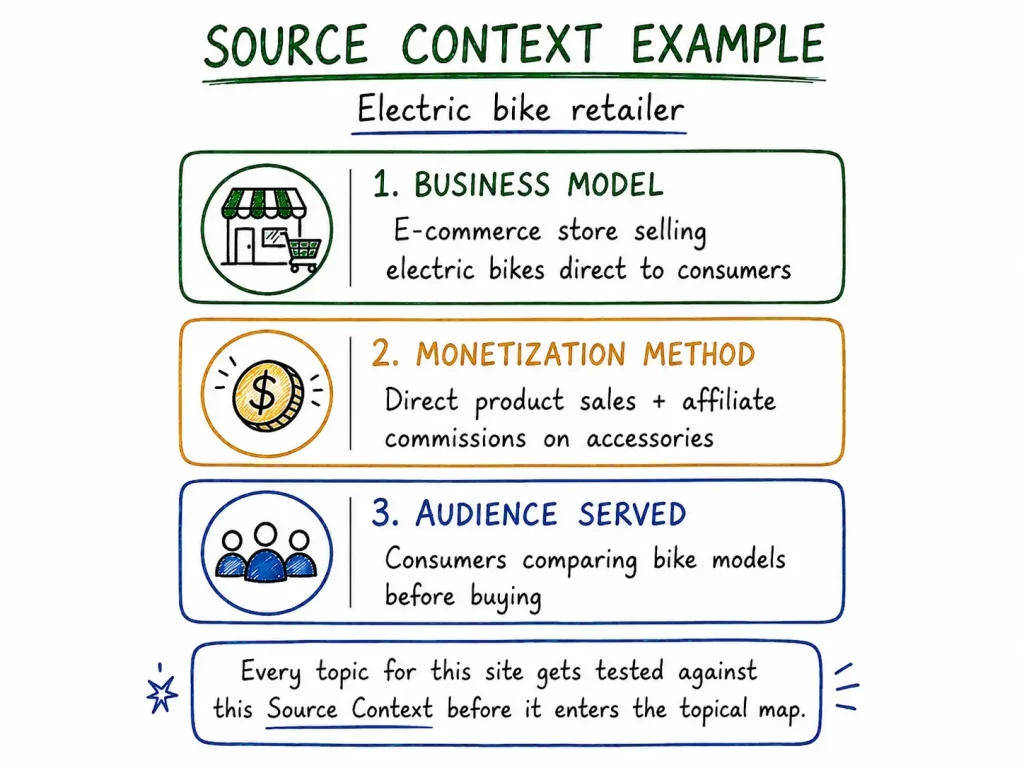
An online retailer selling electric bikes direct to consumers has this Source Context: an e-commerce business monetizing through direct product sales and affiliate commissions on accessories, serving consumers deciding between bike models. Every topic considered for that site’s map, from battery range comparisons to local riding laws, gets tested against this definition before it earns a place in the Core Section or Outer Section.
What Happens Without a Defined Source Context
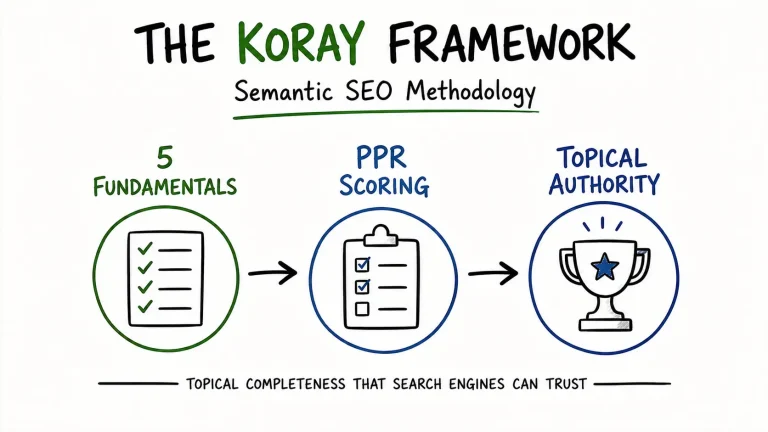
Without Source Context, PPR scoring has nothing to measure Relevance against. Relevance, one of the two highest-weighted factors in the PPR formula at 40%, specifically measures how closely a topic aligns with Source Context. Skip this step and every topic defaults to being scored on Prominence and Popularity alone, which produces exactly the failure mode PPR scoring exists to prevent: high-volume, low-fit topics getting included because nothing was there to reject them.
This is the mechanism behind the calorie-comparison topic rejected in the worked example on what a topical map is: it scored well on Popularity, but with no Source Context defined, there would have been no basis to score it poorly on Relevance either. Source Context is what makes that rejection possible.
Build a Topical Map With Source Context Defined First
Every topical map built at TopicalMap.Services starts with Source Context, before a single topic is scored. If you want a map built this way for your own site, see the full service for pricing and deliverables.
Frequently Asked Questions
Is Source Context the same as a niche?
No. A niche describes a general subject area. Source Context describes the specific business model, monetization method, and audience behind a site within that niche. Two sites in the same niche can have entirely different Source Contexts.
Can Source Context change over time?
Yes. A site’s Source Context shifts when its business model changes, entering a new market, adding a new monetization method, or expanding to a new audience. When it shifts, the topical map needs to be reviewed against the new Source Context.
Does every page need to restate the Source Context?
No. Source Context is a strategic input used once, at the start of building the map, to test which topics belong on the site. It is not content that appears on the page itself.
What’s the difference between Source Context and Central Entity?
Source Context defines why a site is allowed to talk about its subject. Central Entity defines what that subject is. Source Context answers the business question; Central Entity answers the topic question. Both are required before Central Search Intent can be defined.